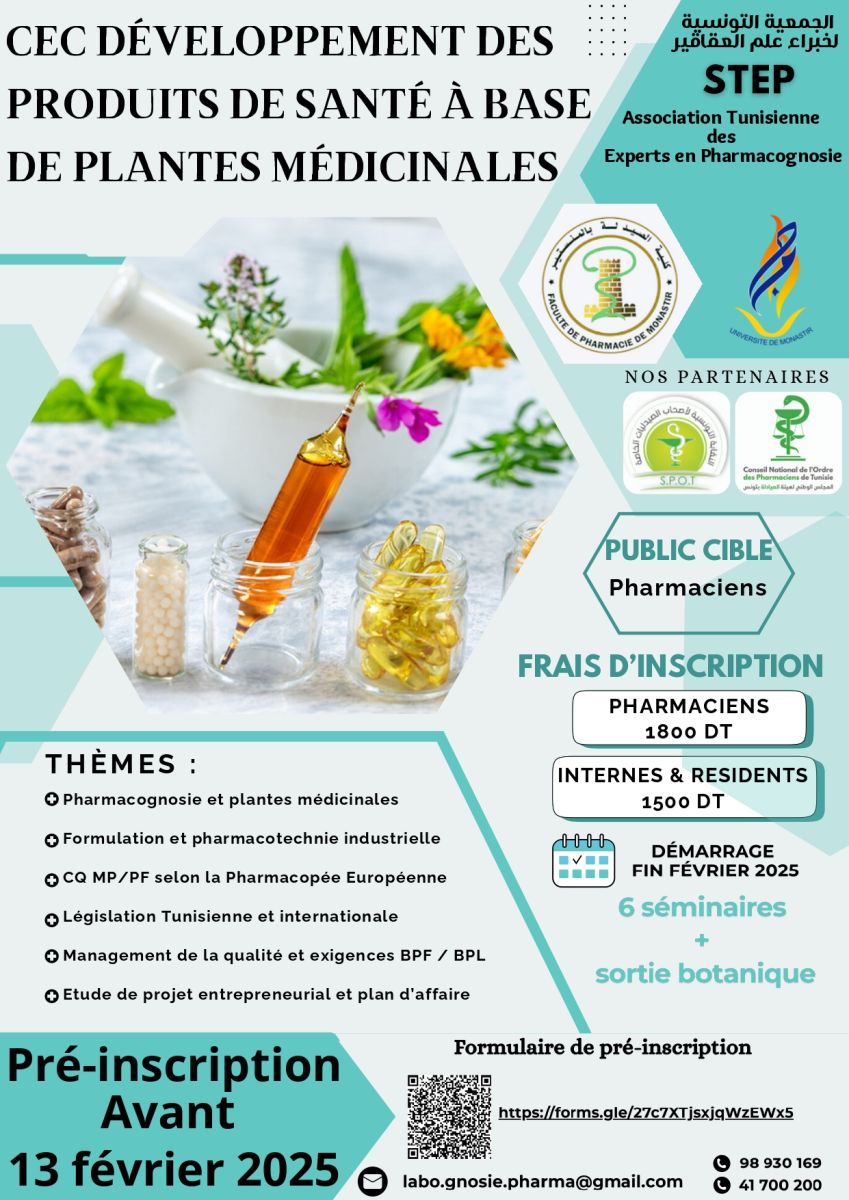
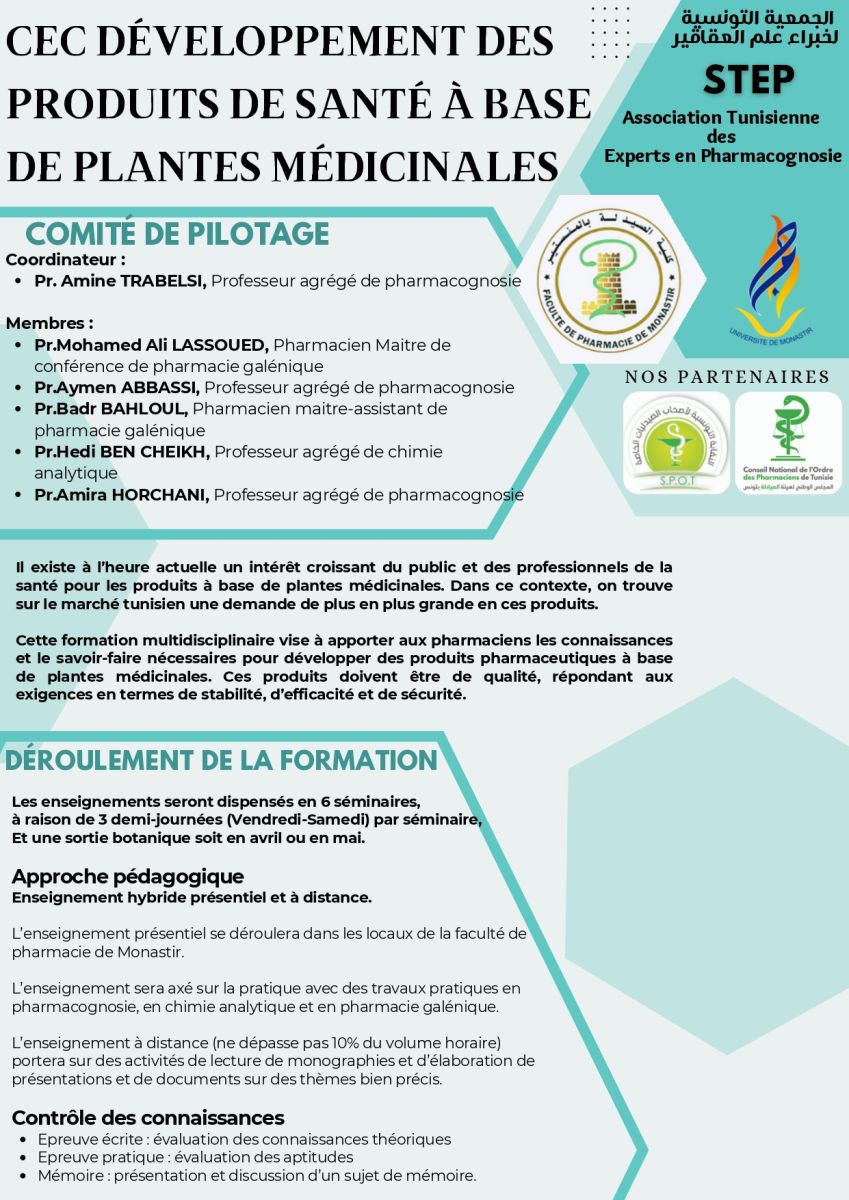
CSC DEVELOPMENT OF HEALTH PRODUCTS BASED ON MEDICINAL PLANT
CSC DEVELOPMENT OF HEALTH PRODUCTS BASED ON MEDICINAL PLANT
Context
There is currently a growing interest among both the public and healthcare professionals in products derived from medicinal plants. In this context, the Tunisian market shows an increasing demand for such products.
This multidisciplinary training course aims to provide pharmacists with the knowledge and expertise necessary to develop pharmaceutical products based on medicinal plants. These products must be of high quality that meet requirements in terms of efficacy and safety.
Target audience
This CSC is intended for:
- Industrial pharmacists wishing to enter the field of medicinal plants.
- Community pharmacists interested in preparing magistral or officinal preparations based on medicinal plants in their pharmacies.
- Pharmacists aiming to set up their own project in the manufacturing of products based on medicinal plants.
Training objectives
Upon completion of this training, candidates will be able to:
- Distinguish between the different classes of secondary metabolites that represent the active substances in medicinal plants, as well as their extraction methods and pharmacological properties.
- Describe the indications, contraindications, adverse effects, toxicity, and dosage of the medicinal plants most commonly used in phytotherapy.
- Perform quality control of plant-based raw materials according to the recommendations of the European Pharmacopoeia,
- Formulate classical dosage forms (capsules, suppositories, creams, gels, syrups, etc.) and innovative forms (Drug Delivery Systems) from medicinal plants and their extracts.
- Understand the basic concepts of quality management and the requirements of GMP (Good Manufacturing Practices) and GLP (Good Laboratory Practices) requirements.
- Gain awareness of the legislation governing medicinal plant-based products in Tunisia.
- Carry out an entrepreneurial project study and prepare a business plan.
Training structure
The total duration of the training is 90 hours.
The courses will be taught from November to June, across 7 seminars, each lasting 2 days (Friday–Saturday).
A botanical field trip will be organized in April or May.